Ancestral Art
What if art could help us reconnect with our ancestors? In this article, I explore how creative practice became my doorway into ancestral connection, healing, and remembrance. I reflect on the importance of ancestral work, the impact of losing connection to family, land, and lineage, and how art can help us reconnect with the wisdom, grief, and medicine carried through our ancestors. Art supports a gentle, embodied relationship with ancestry - by offering our creative energy and time, and honoring what lives inside us. This practice can help create new pathways of belonging, repair, and creative empowerment.
Reconnecting through art, memory, and the wisdom that lives inside us
Lately, I have felt the ancestors moving.
Not in a dramatic way. More like a quiet knocking. For me, they often show up in dreams, spontaneous memories, and lately they have been showing up in my drawings again.
I also felt certain familiar family patterns arising again, asking for attention. And with it many questions about where I come from and what I am passing on to my daughter.
What did I inherit?
What am I carrying for my family?
What family stories shaped my understanding of safety, love, home, belonging?
What has been passed down that I no longer want to carry forward?
And what wisdom or medicine is waiting to be remembered or reawakened?
I have been working with art for many years as a way to explore these and other questions and move beyond the limitations of the logic mind.
This is the heart of Ancestral Arts for me.
Art offers a way to enter the conversation from a place of openness to whatever wants to show up - through image, color, movement, intuition, symbol.
My own Ancestral Arts work began as a way to connect and at the same time it was an echo of loss and love.
Art as a bridge to the ancestors
I began creating Ancestral Art through grief, and in search of a way to honor the passing of my beloved grandmother Ina.
In 2020, my grandmother died back home in Germany while I was living in the United States. There was no way for me to travel because of the pandemic restrictions.
I could not attend the funeral.
I could not sit with my family to remember her.
I could not hug my father as he grieved his mother.
I did not participate in any of the few but meaningful rites of passage that we perform as a family who looses their beloved elder - and my grandmother was truly the matriarch of the clan, with 6 children, 10 grand children and back then 14 great grand children...she died at the age of 98 (but we were all secretly planning for her 100th).
I remember just being in shock and disbelief when I heard the news.
And then I just did what I could do - I made art.
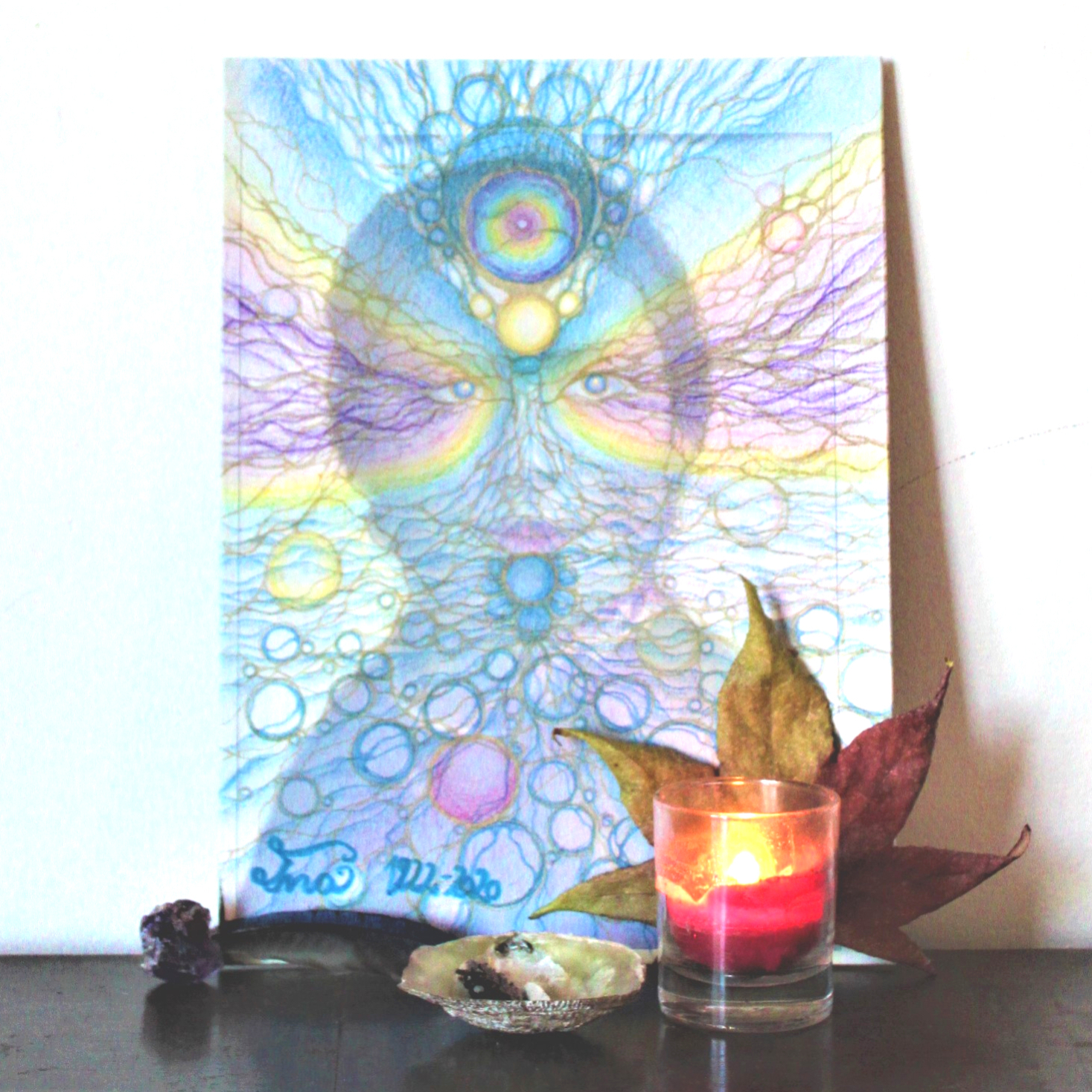
Ancestral Portrait - Ina - by Antje Howard (2020)
For four days, I sat on the porch of my house under a large oak tree. The oak felt safe and grounding to me. It is the German national tree, and in that moment, living so far away, it connected me to home.
I began my art process with a photograph of my grandmother as a young woman. And then very slowly and gently layered it with lines, colors, marks, attention, memory, and love.
In the beginning, I felt like I was drawing myself into the picture. I was overlaying the photograph with my own energy, reconnecting with her through my hand, my eyes, my tears.
I saw that she lived inside me.
I could feel that even though she was gone, I carried her.
When I continued the next day, the image began to change and transform more and more.
She was no longer only my grandmother as I had known her. Something archetypal emerged. She became Grandmother. The grandmother energy. The lineage energy. A presence larger than one individual life. She turned into a character out of a fairy tale.
Over the next layers, her face began to dissolve. At first that was truly painful for me, because I wanted to hold on. But I trusted the process and let the image show me the process of letting go. The drawing became a mirror of grief itself - the movement between holding, loving, and releasing.
Then emerged what I saw as an ocean of souls. More and more small circles appeared. It felt like she was going home, returning to all the people she had loved and lost in her long life. Her individual form dissolved into water, cloud, wind, and then finally a rainbow appeared.
Only her eyes remained - a symbol of connection, memory of her spirit, and my doorway into this other dimension that she was in now.
The final image helped me understand that I could connect with her anytime, anywhere -as an energy that lives on in me, in the family, in the ancestral field, and in the world around me.
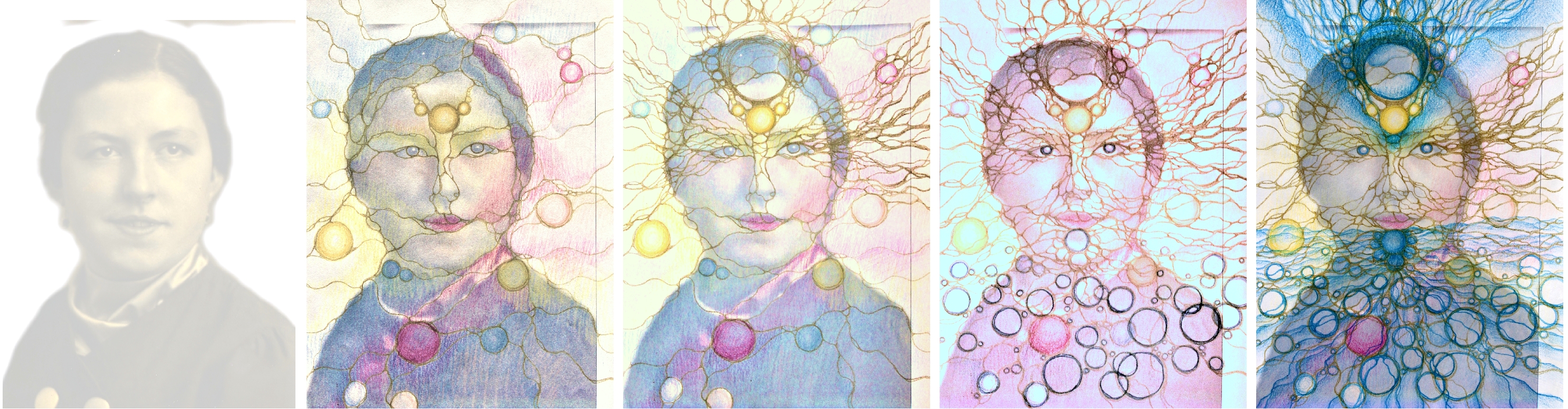
Ancestral Portrait - Ina - process - by Antje Howard (2020)
When the drawing was complete, I placed it on my altar.
While it was still sitting outside under the tree with a candle, I watched a stag slowly step out of the forest for just a moment - and I am very sure I wasn't dreaming. He nodded his majestic antlered head, and then quietly returned into the woods.
This was a truly magical moment for me. It felt like a blessing. A message. An acknowledgment that something had moved. My grandmother was now on her way to meet the Ancestors and take her seat amongst them.
This was the beginning of my Ancestral Arts work.
How Ancestral Arts was born
Before this experience, I had intensively studied the Neurographica® method for several months and had been introduced to what they call Ancestral Mandala. In that specific drawing process, we create layers of circles, and each circle represents an ancestor, moving through seven generations.
Seeing yourself surrounded by seven generations of ancestors is profound.
When I first learned the Ancestral Mandala process, I also quickly realized something important: ancestral work needs a strong, safe, intentional container.
My first Ancestral Mandala drawing opened so much in me that I felt activated for days. I entered a deep trance-like state while drawing and felt strong physical responses as I touched different ancestral lines with the pen. Then, I dreamed of ancestors. I sensed presences. I felt the intensity in my body in a way that really felt "too much".
That experience taught me that this work should not be rushed or treated casually.
There needs to be an opening, grounding, permission.
And there needs to be completion, gratitude, and closing.
This is why my Ancestral Arts work became guided art ceremonies.
They are not "art classes" but spaces where art becomes part of a sacred ceremony.
The Ancestral Mandala was one of my first "official" classes that I taught while going through the Neurographica training. In fact, I had already announced the date of the first workshop when my grandma passed - and yes this was a very strange and meaningful coincidence.
I used that workshop to create a ritual for her with the intention of supporting her on the journey through the Ancestral Mandala. It became the first time where I consciously created and shared art as an offering to the ancestors, and I have revisited and refined this work every year since then.
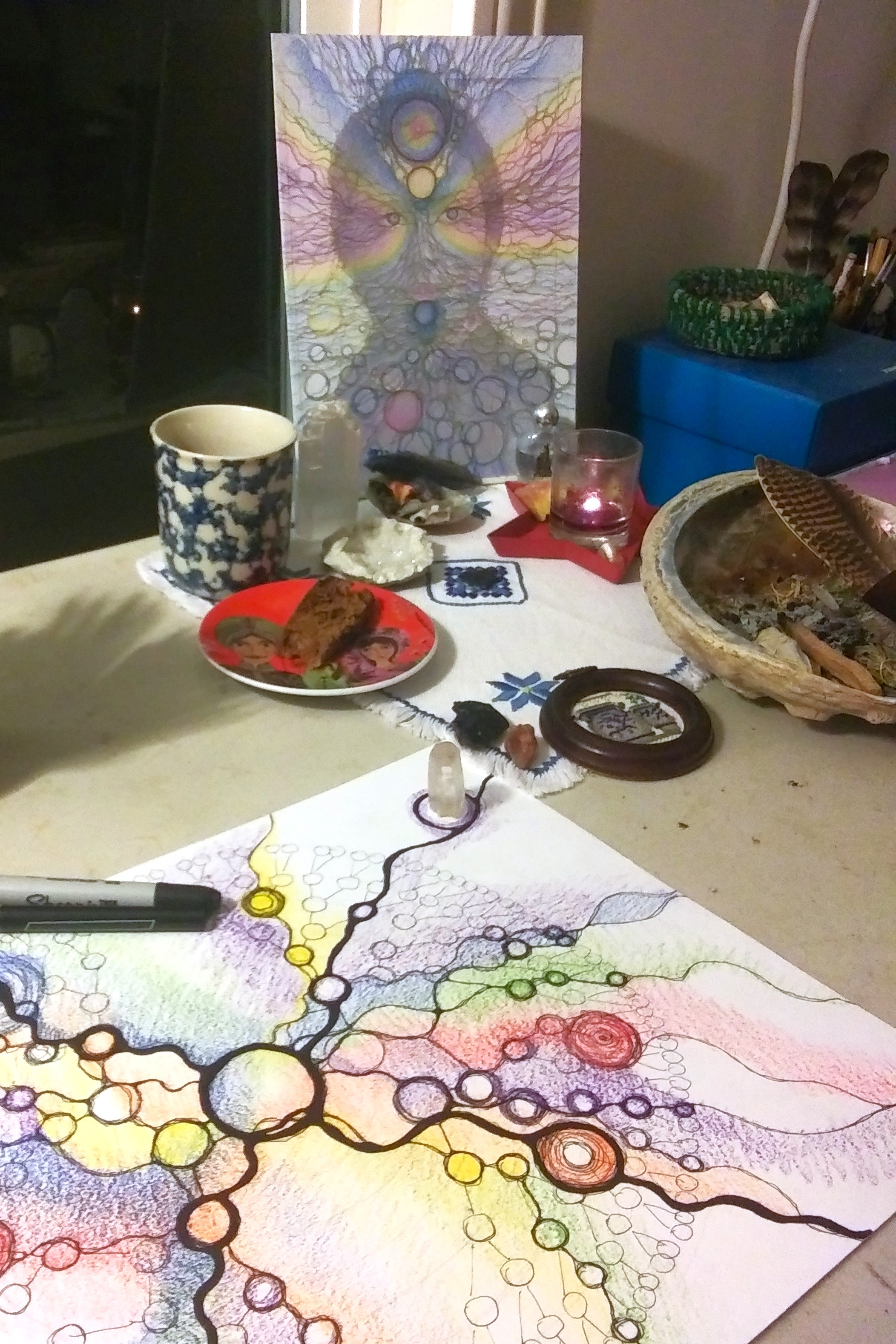
Ancestral Art Ceremony for Oma Ina (2020)
The depth of Ancestral Art work
In my Ancestral Art Ceremonies, we do not simply “make a drawing about ancestors.”
We enter slowly, with respect and humility. We open ourselves to be guided and approach the process as a creative field of relationships.
We begin with the body, the breath, and grounding. We create a felt sense of safe space. We connect to the earth. We acknowledge the land and the beings who came before us. We invite reverence and reciprocity. We gently open the inner doorway into the Ancestral realms through a guided inner journey. Only then we move into the art process.
The art itself can focus on different aspects of ancestry - I have created processes around connecting to our roots, ancestral lines and lineages, generational healing, or specific ancestors. Sometimes we work with known ancestors. Sometimes we work with the unknown. Sometimes we work with bloodline. Sometimes we widen the field and remember that the earth herself is also ancestor.
The journey through layers is what connects each ceremony: We root. We open. We listen. We draw. We witness. We integrate. We close.
Ancestral work can bring up tenderness, grief, shame, longing, anger, love, and unexpected memories or images. The focus of this work is to create a space where inner knowing can safely come forward.
The drawing becomes a bridge between the conscious and the subconscious, between body and image, between memory and imagination, between personal story and ancestral energy.
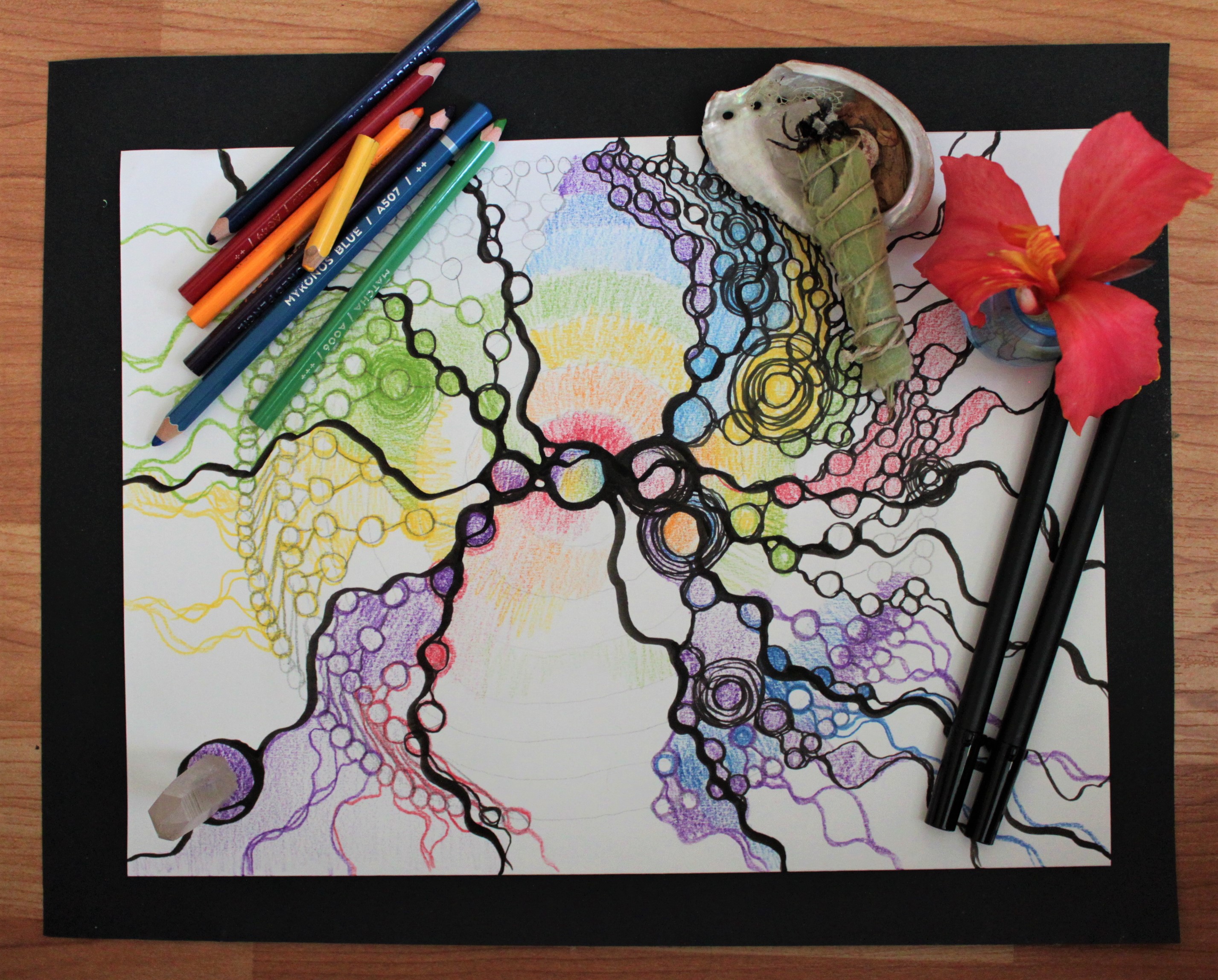
Ancestral Mandala by Antje Howard (2022)
How art helps us reconnect
Many of us do not know their full family trees.
We do not know the songs, languages, lands, or rituals of our people.
We carry fragments.
Art allows us to begin with these fragments and rebuild connection from there.
We invite color, shape, line to speak to us on a different level, beyond the mind.
A sensation in the body can help us feel a connection, or let us know where healing is needed. A symbol can transmit knowing before we consciously understand it.
When we create, we do not need to know everything. We can enter relationship through attention, through trusting the process, and through just being with it.
This is one of the reasons I love visual ancestral work.
A drawing can hold complexity without needing to resolve it. It can hold grief and love at the same time. It can hold shame and reverence. It can hold what we know and what we may never know.
Art can repair and mend connections without the need to know the whole story. The image can help our mind create new stories, and I believe this is how we become the cycle breakers and bring healing to our lineages.
When I draw in this way, I often feel that the line knows something before I do.
It moves where my thinking mind would not go. It makes something visible that was vague inside me before. It creates a place where emotion, memory, intuition, and body sensation can meet.
This is how art can become part of ancestral healing.
Not because the drawing magically fixes the past. Not because one ceremony resolves generations of pain.
But because art gives form to relationship.
It helps us see. It helps us feel. It helps us stay present with what is complicated. It helps us create beauty without denying grief. It helps us listen to the ancestral energy and wisdom that lives inside us.
And perhaps most importantly, it helps us remember that connection is always possible.
Even when the stories are painful. When the thread has been broken. When we do not know the names. When we are far from the lands where our ancestors were living.
Art offers a beginning, an opening, a way to start the exploration.
Each drawing can become a doorway. And through that doorway, we discover that we were never truly alone.
In the drawing of my grandmother, I received images. A dissolving face. An ocean of souls. A rainbow. The yes that allowed me to see beyond.
Those images changed my relationship to her death. They gave me a way to participate in a rite of passage when I could not physically be there. They helped me move from separation into connection. They helped me understand that ancestry is not only behind me. It is inside me.
From my experiences with Ancestral Art, I understand that my ancestors are living in my body, in my bones, my blood, in all my cells, connected through invisible threads. And I can make these threads visible through my art.
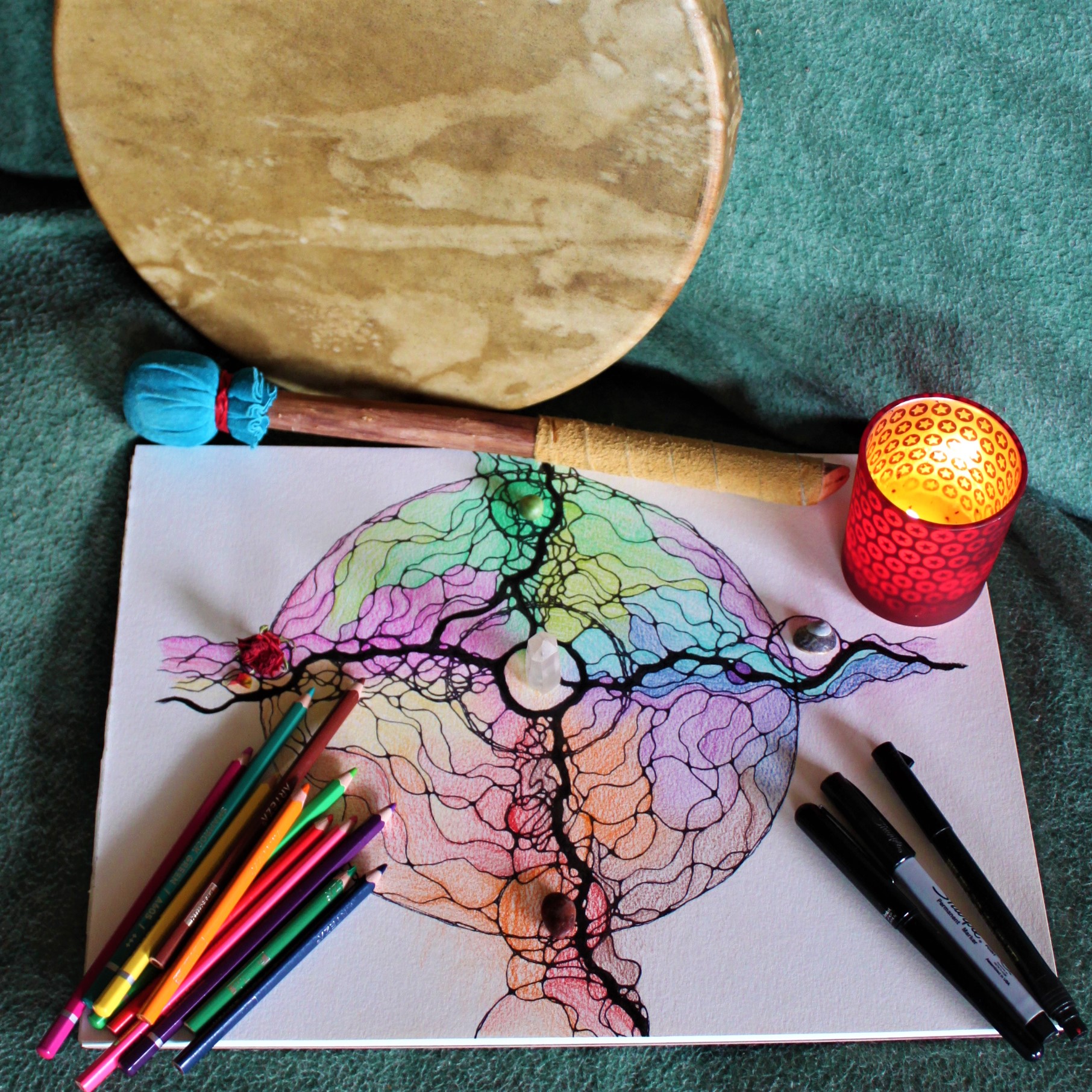
4 Directions Ancestral Art Ceremony (2021)
Becoming a well ancestor
For me, ancestral work is not only about looking backward.
It has also become about asking: What am I passing on?
When I became a mother, this question lit up inside of me. I realized in a new way that one day, I too will be an ancestor.
And I believe that this does not only apply to people who have children. We all become ancestors of culture. We all contribute to the field and we literally create the physical world that future generations will inherit.
Every choice ripples.
How we speak. How we create. How we tend land. How we relate to our bodies. How we process grief. How we take responsibility for inherited patterns. How we repair. How we refuse to pass on what harmed us. How we protect beauty. How we remember.
Many Indigenous frameworks speak of responsibility to future generations. From these traditions we learn that our decisions should always consider the wellbeing of those yet to come. While this idea is often simplified in mainstream culture, the deeper invitation is not just intellectual. It is embodied. It asks us to live with the awareness that our lives are part of a much longer story.
This is where ancestral work becomes cultural work.
When we reconnect with the ancestors in a grounded, honest, and creative way, we begin to restore a sense of belonging that is not based on superiority, nostalgia, or purity.
It is based on responsibility.
We can ask:
What patterns end with me?
What wisdom wants to live through me?
What traditions am I called to remember, protect, or create?
What kind of ancestor am I becoming?
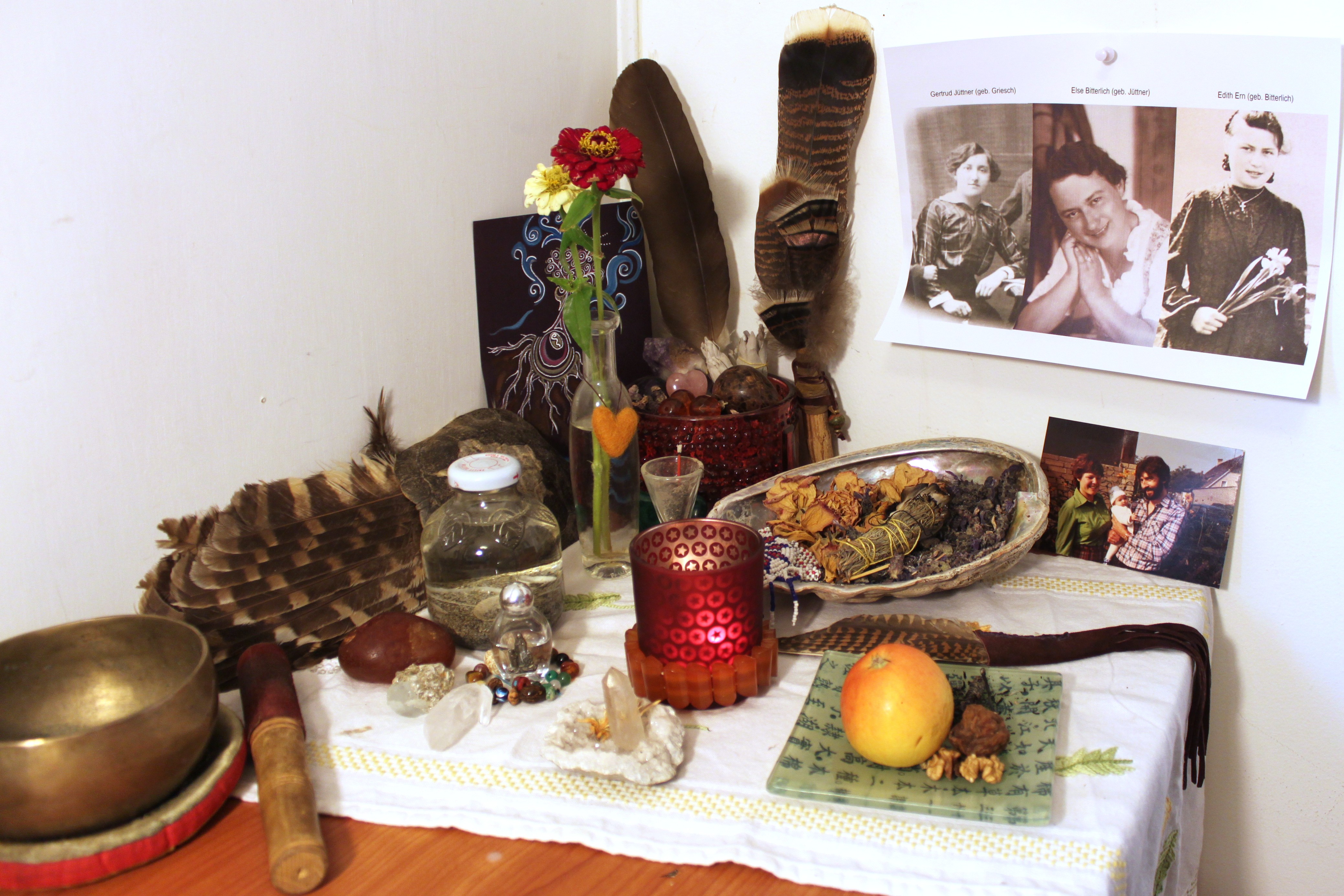
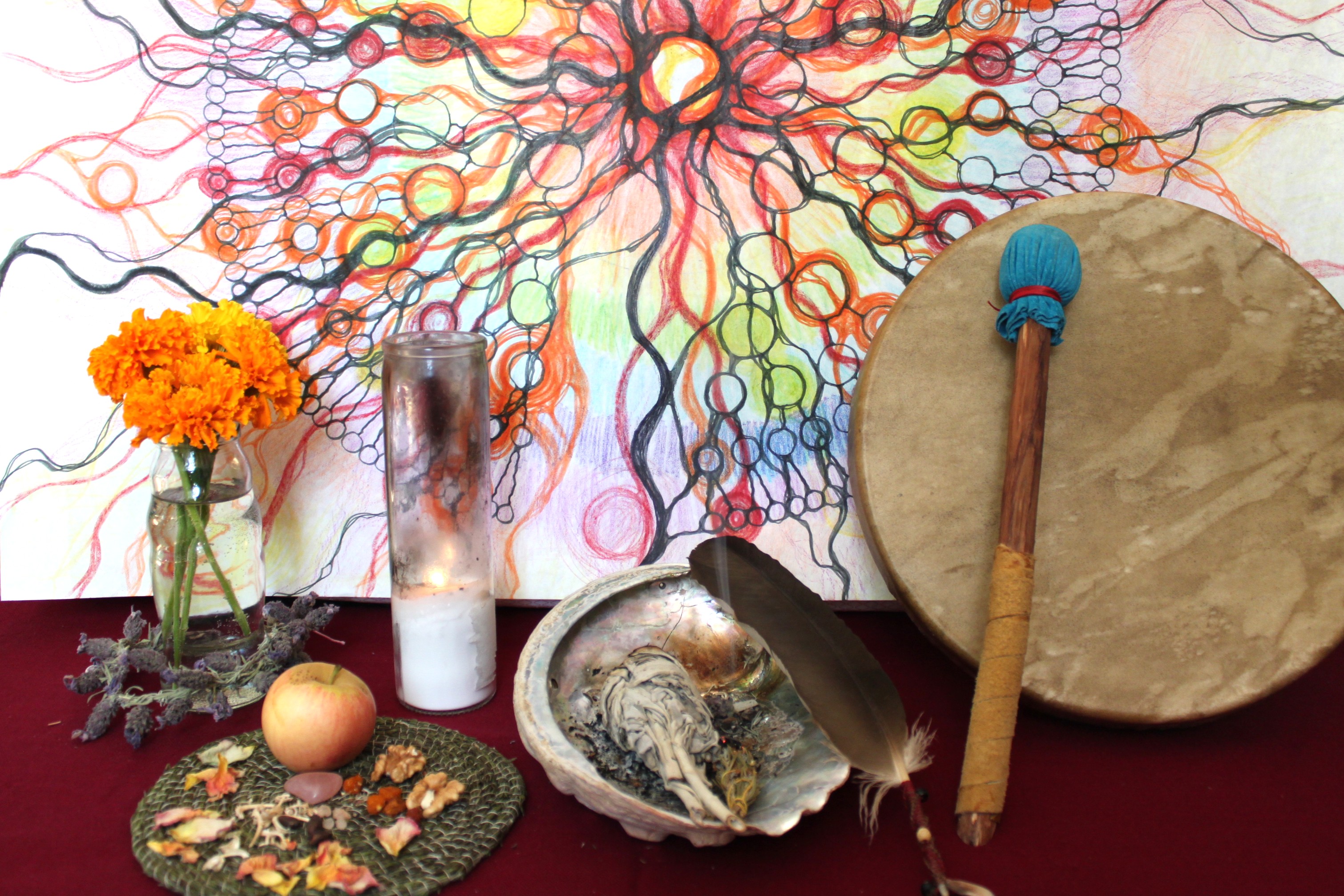
Mother Lineage - altar (2024)
Creating new traditions from broken parts
Many of us will never recover an unbroken ancestral tradition.
There will be gaps we cannot close.
There will be languages we do not speak, songs we do not know, rituals that were lost, names that disappeared, migrations that severed connection to land, and histories that were never written down.
That is real.
And still, we can begin.
We can begin by tending what is here.
We can light a candle for our dead.
We can place a photograph, a drawing, or even a map on an altar.
We can cook a family recipe.
We can learn the history of the land we live on.
We can research our family stories without needing them to be clean or comfortable.
We can sit under a tree and draw.
We can ask what wants to be remembered through our hands.
We can create small rituals of gratitude, repair, and connection.
We can build traditions that our descendants — biological, creative, cultural, or spiritual — may one day inherit.
This is not about pretending to be from a culture that is not ours. It is not taking ceremonies that do not belong to us. It is not bypassing history with vague ideas of “love and light.”
It is about rooting more honestly into our own humanity.
It is about remembering that every lineage holds both wound and medicine.
And most of all, it is about finding the courage to look, the humility to listen, and the creativity to bring something life-giving forward.
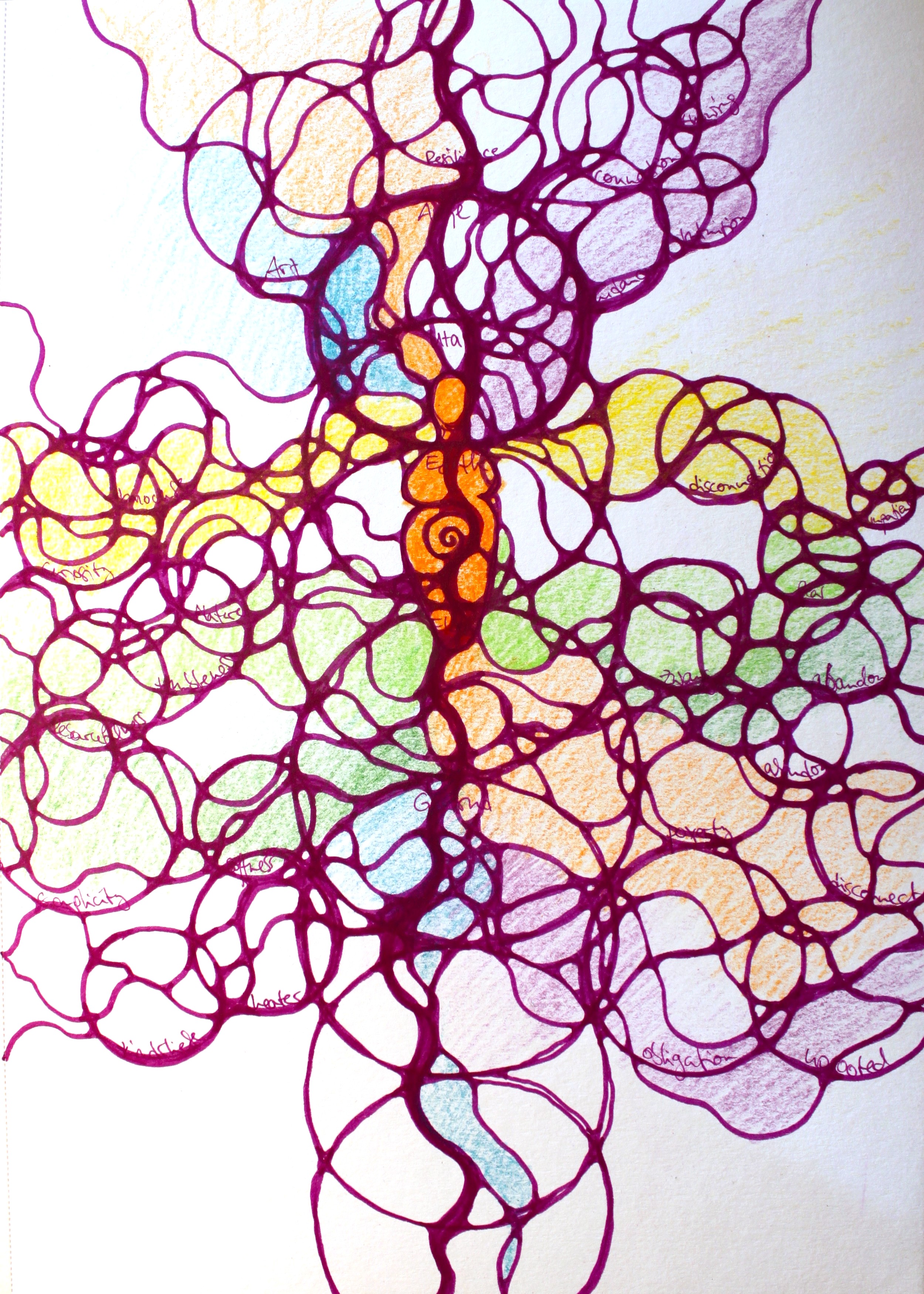
Mother Lineage - drawing by Antje Howard (2024)
The Ancestral Arts Collection
If you feel ancestral themes moving through your life right now - in dreams, in your art, in family memories, in old patterns, or in a longing you cannot quite explain - you may be feeling the call to enter this work more intentionally.
Ancestral connection does not have to begin with certainty. You do not need to know your full family tree. You do not need to have stories, names, or traditions. You can begin with what is here: your body, your breath, your creativity, your questions, your grief, your longing, and your willingness to listen.
This is the heart of my Ancestral Arts program.
Through guided Ancestral Art Ceremonies, we create a safe and reverent space to reconnect with the ancestors, explore the roots that live inside us, honor what came before, and begin to transform inherited patterns through art, meditation, reflection, and presence.
Since my first workshop in 2020, I have continuously developed and expanded this program. It currently includes 14 recorded ancestral art journeys.
You can explore guided art processes for exploring your roots, recreating the web of seven generations before you, working with specific ancestral lineages, healing the mother line, honoring known ancestors through ancestral portraits, and reclaiming the medicine of your ancestral lineage.
Each process invites you into a different doorway of ancestral connection.
Some drawings help you feel more rooted.
Some may bring tenderness or grief to the surface.
Some will reveal strength, wisdom, or medicine you did not even know you carried.
Some simply give you a visual place to honor those who came before you.
This work is not about romanticizing the past or forcing a spiritual experience. It is about entering relationship - slowly, honestly, creatively - with the ancestral energy that lives inside you and the wider web of life you belong to.
Visit the course website below to start drawing with 2 free introductory videos.
Join me to listen, remember, honor, and begin to mend the threads of connection.
Ancestral Arts Collection
Guided Ancestral Art Ceremonies with Antje Howard
a collection of 13 prerecorded sessions - each about 2 hours long
Birthday SALE 45% off with code: BDAY2026
($122.10 instead of regular price $222 - valid until July 18th 2026)
>>SIGN UP HERE<<